Sales & Customers
Before You Sign a Phone Contract, Test These Exit and Administration Questions
Confirm account control, number portability, exports, support boundaries and cutover responsibilities.
Turn good inquiries into lasting customer relationships.
Confirm account control, number portability, exports, support boundaries and cutover responsibilities.
Decide what should be shared, local or overflow routing when a business adds a location.
Keep menu branches tied to real teams, services and fallback choices.
Define when calls can forward, when they must route to a queue and who changes the setting.
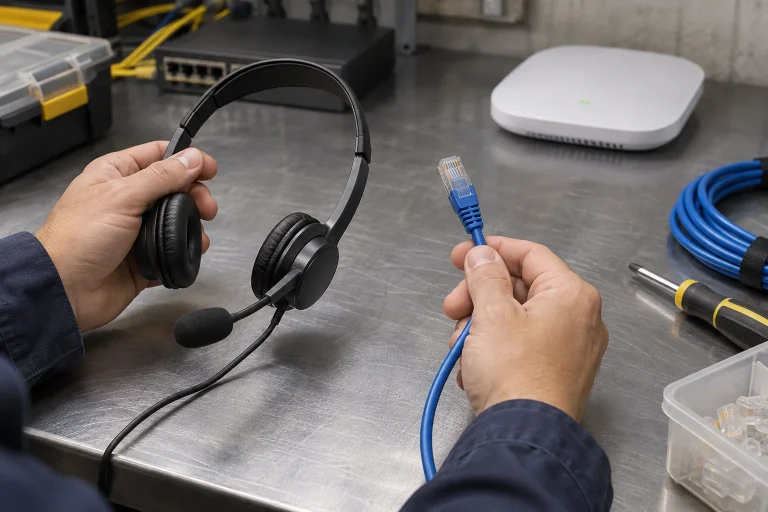
Choose devices by work context, physical controls, mobility and contingency needs rather than aesthetics.
Choose customer-facing fallback behavior and ownership before an outage occurs.
Collect the right evidence before replacing phones or blaming a carrier.
Estimate peak simultaneous conversations from observed call patterns and failure tolerance rather than employee count alone.
Emergency-calling setup is a change-control responsibility. Keep location records, direct dialing, notification settings and provider instructions aligned whenever people, phones or offices move.
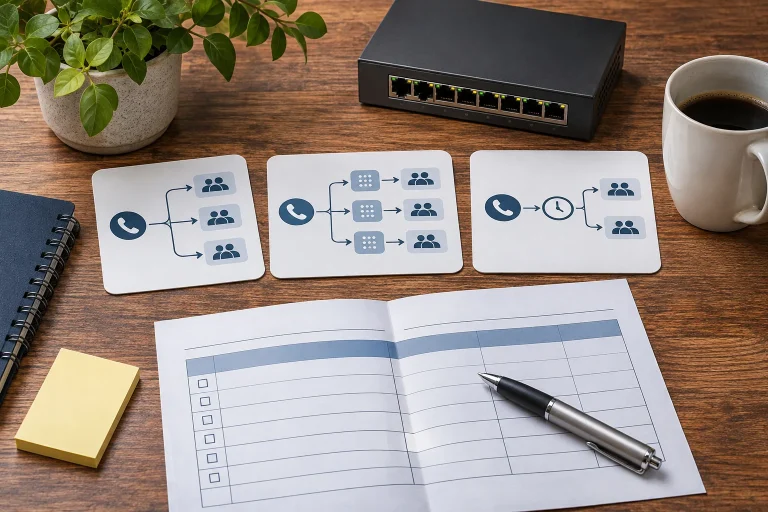
A useful ring group assigns calls by responsibility, with a deliberate overflow and a truthful after-hours outcome instead of ringing every employee.
Porting a business number is a service-continuity change. Inventory every dependency, keep the old service until the new route works, and make one person accountable for the cutover.
Compare hosted PBX, UCaaS and SIP trunks by deciding who operates the phone system, who owns the user experience, and what the business can support when something fails.