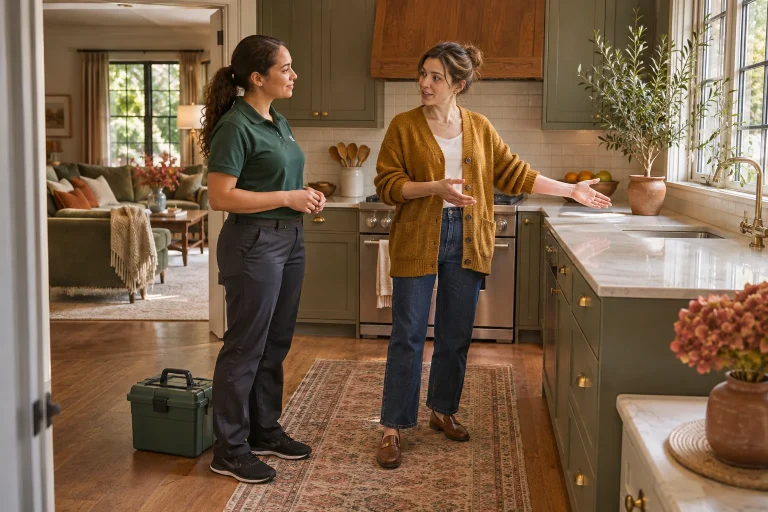
Seasonal property preparation is a one-time or scheduled preparation visit, not a home-watch, security, repair, inspection or emergency-response promise. It can help an owner complete a known list before a season, departure or reopening. Its value comes from an agreed checklist, an access route, a clear record of exceptions and a handoff back to the owner.
Start with the owner’s purpose
Ask what event the preparation supports. A closing visit before a seasonal absence, a reopening visit before arrival, and a weather-readiness visit have different tasks. Do not write “prepare the house for winter” as the entire work order. Translate it into observable tasks and owner decisions: place owner-provided covers, check that designated interior lights are off, stage approved supplies, close owner-identified interior shades, or report a visible condition that prevents completion. The owner decides what must be done and which vendor handles repairs.
Keep the checklist bounded
| Appropriate checklist item | Separate decision or provider |
|---|---|
| Stage an owner-provided cover in a stated location | Repair a roof, window, pipe, appliance or electrical system |
| Confirm a listed room was accessed | Promise that a property is secure or free from damage |
| Record a visible exception | Diagnose moisture, pests, mold or structural conditions |
| Place approved supplies for reopening | Purchase replacements without authorization |
| Return keys through the agreed route | Hold keys or monitor the property outside the agreement |
A practical checklist has a location, task, completion state and exception route. It should be short enough to use at the property. If an owner wants ongoing observations, create a separate service with defined visit frequency, reporting and boundaries rather than describing a preparation visit as surveillance.
Plan access and authority first
Record who authorizes entry, where access materials are stored, which spaces are included, and who can decide about an exception. Do not accept directions from an unknown neighbor or contractor. If the owner changes a code or locks a space that was included, mark access unavailable and contact the named person. OSHA’s hazard-identification guidance supports checking actual conditions and documenting hazards; for this service, that means pausing for unsafe steps, damaged access points, standing water, active work or another condition that makes the agreed visit unsuitable.
Use a three-part record
Arrival: record access, the areas entered and visible barriers. Completion: check only the owner-approved tasks. Exception: identify the location, factual condition and requested owner decision. Avoid language that suggests an inspection finding. “Water visible beneath laundry-room door; preparation task not completed in that area” is a useful record. “Leak source identified” is not, unless a qualified provider actually made that determination.
Photographs can be helpful only when the owner’s process permits them and the image serves a specific operational purpose. Avoid photographing personal papers or private rooms beyond what is necessary. Store any record through the agreed customer channel, not a worker’s personal device collection.
Define the service unit and the visit limit
Quote the complete visit, including travel, access arrangements, preparation of the work order and the completion record. A short checklist can still require substantial coordination when an owner is away. Decide whether the package covers one visit, an agreed number of accessible areas or a stated time allowance. Explain how blocked access or an owner-requested addition affects that unit before booking.
Use a separate approval for new work rather than letting a vague seasonal label expand the service. A request to stage patio covers is different from securing a damaged structure. A request to record an appliance condition is different from diagnosing it. Check local business requirements and discuss the described activity with appropriate insurance and professional advisers.
Schedule preparation before the hazard window
The National Weather Service discusses preparing supplies before winter weather, and NOAA distinguishes longer-term readiness before hurricane season from action when a storm threatens. These resources support advance planning; they do not turn a checklist visit into a weatherproofing certification. The owner should select relevant official guidance and qualified providers for the property and location.
Set a weather and access decision before dispatch. If authorities advise against travel or the site no longer supports the agreed work, communicate the exception and reschedule through the approved process. Do not market guaranteed last-minute emergency attendance when you are selling routine preparation. Also state whether the owner must supply materials and clear the route before your arrival.
Close the visit without implying continuing coverage
Send the completed checklist, unavailable tasks, factual exceptions and key-return confirmation through the agreed channel. Ask the named owner to acknowledge any decisions that remain theirs. An exception message sent once is not an agreement to keep monitoring it. If another visit is requested, define its purpose, access and price separately rather than leaving an open-ended obligation behind.
Illustrative job
An owner schedules a preparation visit before leaving a cabin for several months. The checklist names exterior furniture covers, interior supply staging, closure of specific shades and a return route for keys. On arrival, the worker finds a blocked path to one storage closet and a damp spot beside an appliance. The worker completes accessible checklist tasks, records the two exceptions, does not move stored belongings or diagnose the dampness, and asks the owner whether to arrange another provider. The service is complete for its defined tasks without pretending to provide home watch or repair.
Before offering the service
- Can the owner state the event and the exact checklist result?
- Are access, key return and decision authority documented?
- Does the agreement exclude monitoring, security, repair and specialist diagnosis?
- Is there a factual exception route for blocked or unsafe areas?
- Does the record show the difference between a completed task and an unavailable task?