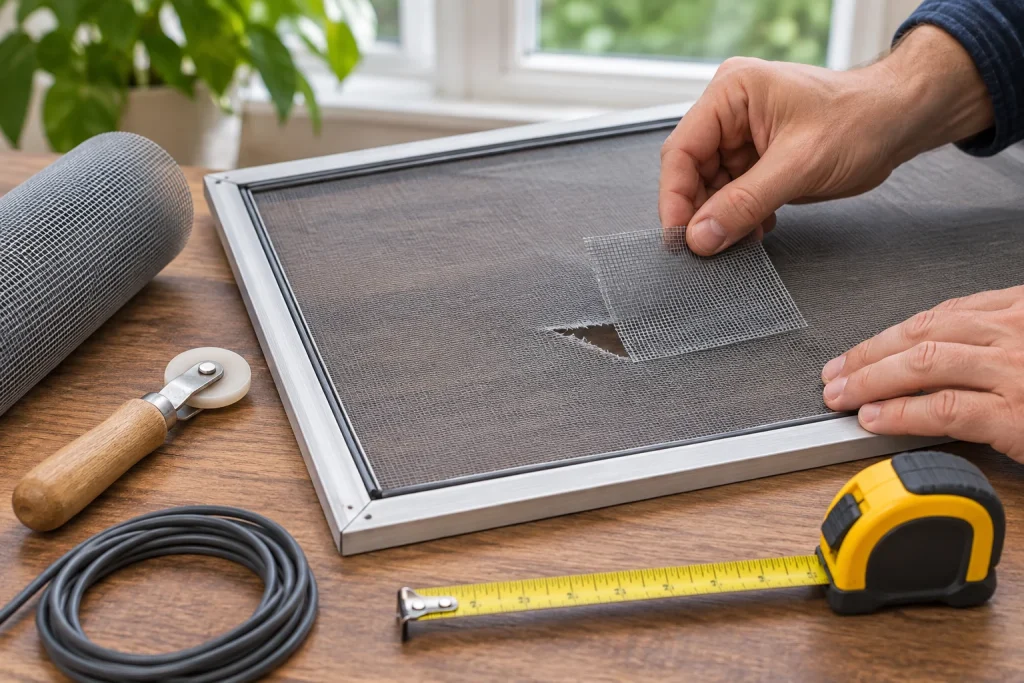
A window-screen repair service should begin with intake, not replacement mesh. A screen that looks ordinary may have a different frame profile, corner condition, spline size, mesh type, locking tabs or mounting route. The useful service is a documented decision: can this screen be measured, removed, repaired and returned within the provider’s defined capability?
Define the repair boundary
Start by stating what the business does and does not do. A basic service may measure removable screens, replace agreed mesh, clean loose debris from the frame, and return the item to a customer-designated location. It should not imply window repair, glass work, weatherproofing, structural assessment, lead-paint handling, ladder work, or a guarantee that a damaged window opening will accept a repaired screen. Those are different tasks and may require another provider.
Ask the owner to identify each screen and confirm access. A screen attached to a ground-floor removable frame is different from a screen at height, inside a restricted room, or part of a window system that the customer cannot safely release. Do not remove a frame simply because the customer points to it. Confirm that the customer authorizes removal and that the item can be handled within the agreed route.
Create an item-level intake record
| Record | Why it matters |
|---|---|
| Customer item identifier and room | Prevents similar frames from being mixed on return. |
| Width, height and frame profile observations | Lets the provider confirm material and work fit before pickup. |
| Visible condition at intake | Separates existing bends, tears, missing tabs or damaged corners from later questions. |
| Requested mesh and approved substitute | Stops an unapproved material change. |
| Pickup and return contact | Creates a controlled chain of custody. |
| Excluded condition | Records when a frame, opening or access route needs a different provider. |
Measurements must be practical, repeatable and checked. Measure the frame itself according to the service’s stated convention, not the apparent opening alone. Record units and any unusual shape. If a screen is warped, its frame corners are loose, or it has missing hardware, explain whether the business can repair that condition or can only return it unrepaired. Do not conceal uncertainty with a generic “standard size” assumption.
Use a two-step pickup decision
Step one: remote screening. Request clear photos and ask where the screen sits, whether it is removable from a safe reachable position, and whether the client knows of prior damage. This does not replace a site check; it helps avoid a trip for a task outside the service boundary.
Step two: on-site confirmation. Before removing the item, verify the customer’s authorization, label the frame with the agreed non-destructive identifier, record visible condition and measure it. If removal would require unsafe access or reveals a damaged opening, stop and explain the available next step. OSHA guidance on hazard identification supports inspecting the actual work area and documenting conditions rather than relying on an earlier assumption.
Build a simple custody path
A repair provider can lose trust through mix-ups even when the mesh work is good. Keep each frame paired with its intake identifier from pickup through repair, quality check and return. Store it so it cannot be bent under other frames. Before delivery, compare the identifier, recorded measurements, mesh choice and visible condition with the work order. At return, the customer or named contact should confirm receipt. This is a service record, not a valuation or warranty determination.
Check tools and materials before every job
The business should inspect its hand tools, cutting tools and workbench setup. OSHA states that employers are responsible for the safe condition of tools and equipment used by employees and should not permit unsafe hand tools. Keep damaged tools out of service, protect sharp edges, and avoid improvising a repair with a tool not suited to the material. Workers should have a stable work surface and an orderly path for frames, mesh offcuts and packaging.
Illustrative intake example
A homeowner asks for repair of three patio-adjacent screens. At the first visit, the provider finds two removable frames at ground level and one bent frame behind a locked storage area. The customer approves pickup of the two accessible frames, chooses standard mesh after seeing the available options, and asks to revisit the third screen later. The provider labels the two frames, notes a pre-existing bent corner on one, and returns only those two after repair. The incomplete third item is an access exception, not an unrecorded failure.
Before you accept the work
- Can the customer identify the exact removable screen and authorize pickup?
- Are measurements, mesh choice and frame condition recorded separately?
- Does the route avoid unsafe access, glass work and window-system repair claims?
- Will the item retain an identifier from pickup to return?
- Is there a named person to receive the repaired frame?