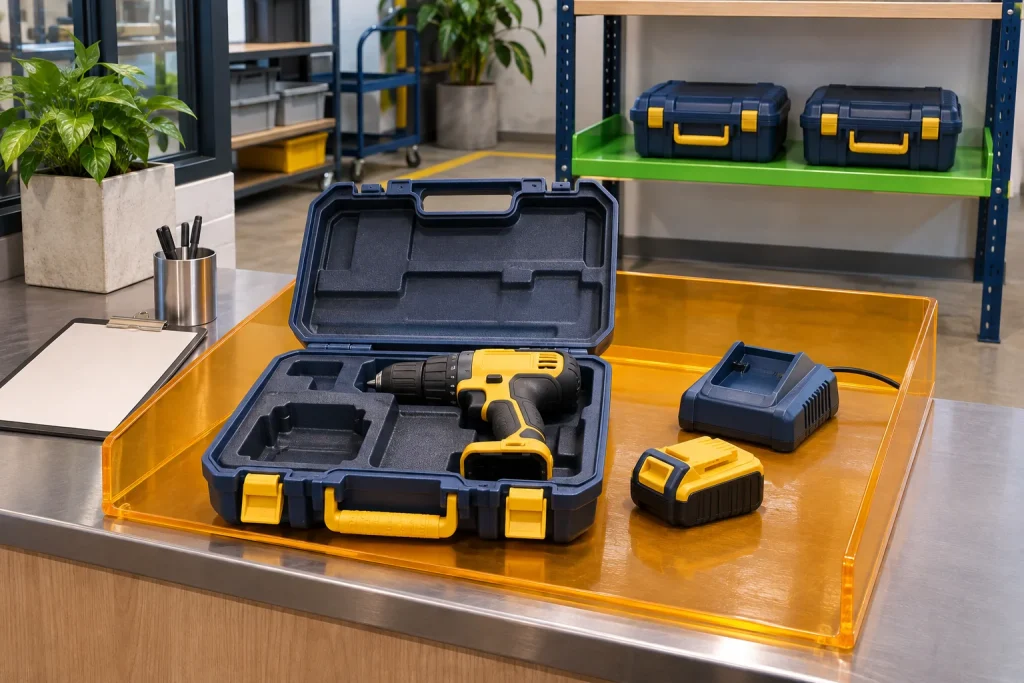
A shared-equipment record should show which item is in someone’s custody, where it is expected to be, when it should return, and whether it is ready for another use. Start with unique identifiers and a brief checkout and return routine. A shelf containing a case does not prove the complete kit is available or suitable for release.
Identify the item and its normal home
Give each tracked item a stable business identifier and an ordinary description. Record serial numbers when useful in the authorized inventory, but use a readable identifier for daily coordination. Similar-looking devices should be distinguishable without opening a private purchasing record.
For kits, list the important components: main device, power supply, cables, adapters, protective case, or other required accessories. Define which consumables are replenished separately. Identify the normal storage location so a returned item has somewhere unambiguous to go.
ASQ’s 5S guidance includes arranging needed items for ease of use and sustaining the arrangement. A visible home location and consistent kit list apply that principle to shared equipment. They support custody records rather than replacing them.
Capture custody when the item leaves
Keep checkout fields limited to facts that support the next decision. Link the relevant work reference, identify the authorized borrower or responsible role, and state the expected return. Note known limitations at issue so later observations can be interpreted fairly.
- Equipment or kit identifier.
- Person or role accepting custody.
- Work reference and expected operating location.
- Checkout time and agreed return time.
- Required accessories issued.
- Known condition or restriction.
- Contact route if timing or condition changes.
Respect the business’s existing rules about who may use equipment and any required qualifications. The checkout form does not confer permission to operate machinery or certify technical readiness. Use the established specialist inspection and release process where needed.
Make return a separate confirmation
At return, compare identifiers and accessories, note relevant condition, and update custody. Use statuses that distinguish returned awaiting check, ready, incomplete, and unavailable pending assessment. The person handing back a case should not silently determine availability for the next user.
Define who checks returns and how unresolved issues are assigned. Atlassian’s roles-and-responsibilities guidance supports clarifying ownership where tasks overlap. Here, the borrower may report a missing cable while the equipment coordinator owns follow-up and the authorized manager decides on replacement.
Record changes to the expected return before the original time passes when possible. An overdue item needs an operational follow-up route and a plan for affected work. Avoid treating an automated reminder as proof that someone has resolved the issue.
A hypothetical projector return
Consider a fictional training company with two similar projectors. Assume kit P-02 includes a projector, remote, power cable, and a specified adapter. A facilitator checks it out for a workshop and returns the case the next morning.
The return check finds the projector and power cable but no remote. The coordinator records the kit as returned incomplete, asks the facilitator to check the workshop room, and identifies who will decide on an alternative if it cannot be found. Another projector remains separately identified as ready.
If the remote arrives later, the coordinator records its return and performs the remaining required checks before changing P-02 to ready. This hypothetical example shows why “back in the cupboard” and “available for the next job” are different facts. No loss rate or improvement claim is implied.
Review the routine for practical gaps
Inspect overdue items, incomplete kits, repeated unclear locations, and items marked ready that later cause problems. Those patterns may call for clearer labeling, a better accessory list, or a different return location. Do not simply add more fields to every checkout.
Check the physical location against the record periodically, especially before busy operating periods. Resolve mismatches with an authorized update and a factual explanation. Keep custody records accessible to the people coordinating work while avoiding unnecessary personal information.
The routine should let a teammate answer three questions quickly: where is the item, who owns the next action, and what must happen before it can be used again? If those answers are visible, the record is serving operations.