A home watch service provides agreed periodic property observations and reports for an absent owner. Define the accessible areas, visible conditions, visit schedule, and response process. Do not promise continuous security, prevention of damage, or discovery of every hidden defect.
The National Home Watch Association describes the activity as visual property checking for obvious issues. That trade-association description is useful for scope discussion; it is not a government license or proof that a provider is qualified for home inspection, security, property management, or repair work.
Choose a customer and visit boundary
A service might focus on seasonal homeowners or owners away for an extended trip. Clarify whether visits cover exterior observations, specified interior areas, or coordination of authorized appointments. Each addition changes access, time, and responsibility.
Keep related services separate. Accepting guests, managing rentals, supervising construction, handling alarm response, and arranging repairs may require different permissions, skills, or coverage. Check official local requirements for the exact activities rather than assuming the home watch label answers them.
Establish a baseline with the owner
Walk through the property with an authorized contact where appropriate. Record included areas, existing visible concerns, access instructions, systems requiring a specialist, and what the owner expects in a report. Identify who can approve additional action if the owner cannot be reached.
| Plan element | Question to settle |
|---|---|
| Visit schedule | Which dates or frequency are agreed? |
| Observations | Which accessible areas and visible conditions are included? |
| Access | Who authorizes entry and manages keys or codes? |
| Concern response | Who is contacted and who can approve outside help? |
| Reporting | What evidence and timing does the customer receive? |
Do not certify compliance with an owner’s insurance policy. Ask the owner to confirm any insurer requirements directly and incorporate the agreed, feasible service schedule without claiming that your visits guarantee coverage.
Report observations without diagnosing
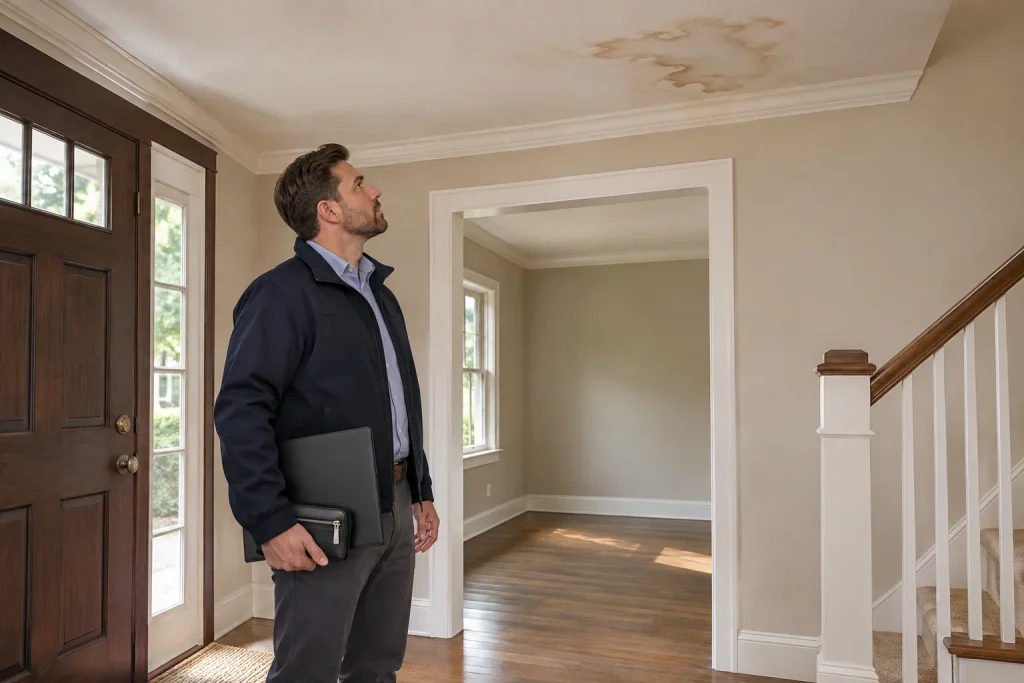
Describe what you actually saw and where. “Water was visible on the floor near the utility room doorway” is different from diagnosing a failed pipe or declaring a building structurally sound. Use photographs where appropriate and authorized, with enough context to show the location.
Distinguish a completed visit from inaccessible areas or conditions that prevented entry. A checklist should allow “not observed” with a reason. Marking every item normal because a door was locked creates a misleading record.
Define the response before a problem occurs
Agree on owner contacts, backup contacts, and the route to appropriately qualified emergency or repair services. Confirm the provider’s authority and any spending approval process. Do not let a property-check contract silently become unrestricted authority to hire contractors or alter systems.
For a hypothetical visit, the observer finds a visible leak and contacts the owner through the agreed route. The owner authorizes an appropriate professional to assess it. The home watch provider documents the observation and coordination, while the professional remains responsible for diagnosis and technical work.
Set weather and emergency limits
Explain that severe conditions can prevent travel or safe entry and describe how schedule changes will be communicated. The National Weather Service advises returning after a hurricane only when officials say it is safe and highlights dangerous post-storm conditions. A commercial promise should not pressure staff to disregard those instructions.
Do not advertise immediate post-storm access without a realistic, safe operating plan. An extra storm-related visit, where feasible, is still a limited observation at a particular time. It cannot establish that the property will remain free from later damage.
Price access, reporting, and coordination
Include travel, the actual visit, report preparation, communication, administration, coverage, and any agreed additional coordination. Define how missed access, extra visits, waiting for a contractor, or extended owner communication is handled.
In an illustrative route, six short visits may each require as much combined travel and reporting time as observation time. Estimate the full appointment cycle before choosing a recurring fee. Do not set a price from the minutes spent walking through the home alone.
Validate trust and traceability
Verify official business and activity-specific requirements and discuss the precise service with an insurance professional. Establish controlled access handling, appropriate confidentiality, and a way to cover absences without sharing property information unnecessarily.
Pilot a small set of suitable properties. Check whether reports are factual, owner contacts work, exceptions have clear owners, and the route is manageable. A viable home watch business sells a defined observation and communication service, supported by clear limits rather than security guarantees.