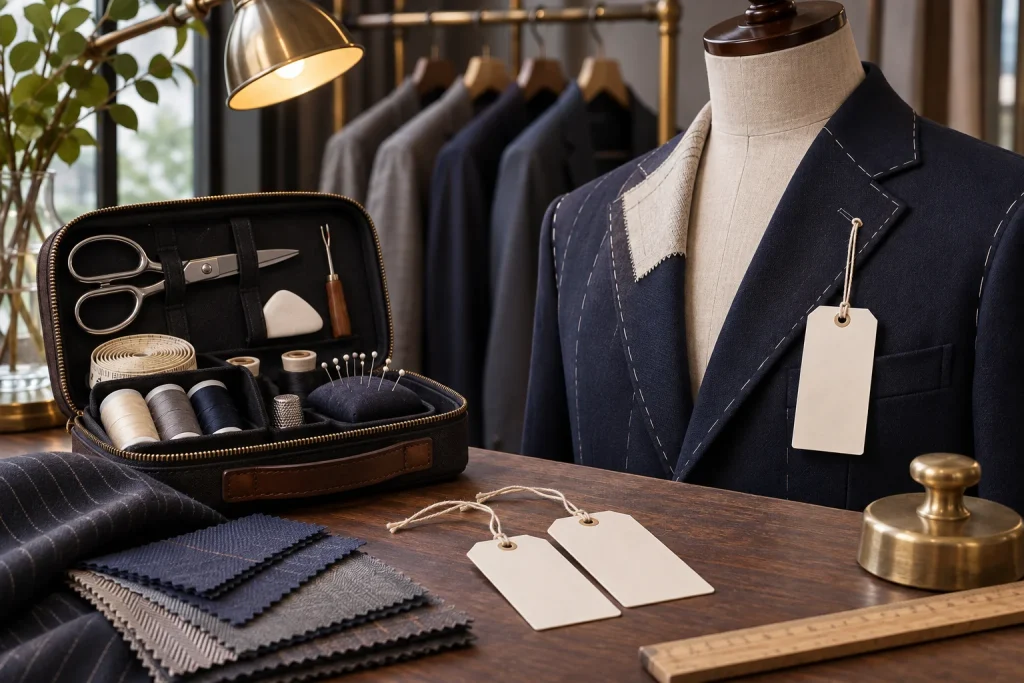
A mobile alterations service should define where fitting happens, where sewing happens and how the customer approves and receives each garment. A visit with a portable kit does not mean every alteration can be completed onsite. Build the offer around demonstrated tailoring skills, suitable materials and a traceable garment handoff.
Choose the mobile service you actually provide
One model brings fitting and collection to the customer while completing alterations in a suitable workshop. Another performs a narrow set of tasks onsite. A third provides planned fitting sessions at a workplace or event venue. Each requires different space, equipment, timing and transport arrangements.
State the included garment and task types. Simple hems, complex lined garments, formalwear and specialist textiles can demand different expertise. Keep safety-critical, protective or otherwise unfamiliar garments outside the initial service unless the appropriate competence, instructions and approvals are genuinely available.
Prepare the fitting appointment
| Before the visit | What to confirm |
|---|---|
| Requested change | The garment and the fit problem the customer wants addressed |
| Fitting context | Appropriate shoes, layers or accessories relevant to the agreed fit |
| Location | A private, suitable and accessible fitting arrangement |
| Customer availability | Who can approve the change and attend any refitting |
| Deadline | The actual event or required return date |
Discuss personal space, assistance and any access needs respectfully. Explain the fitting process before asking the customer to change clothing. Collect only the measurements and images needed for the approved task, with appropriate permission and storage arrangements.
Give every garment its own record
Use a stable garment reference linked to the customer order. Record color, distinguishing details, accessories received, visible pre-existing condition, care information and the requested alteration. A bag containing several similar trousers should not rely on memory or a loose note identifying only the customer’s name.
The Western Australian garment-alterations competency description is a useful example of task-specific skill based on client needs; it is not a credential conferred by reading this guide. The FTC’s care-label guidance shows why garment-care instructions and warnings carry useful information. Do not automatically apply manufacturer or importer legal duties to an alteration service, but preserve relevant existing instructions and seek appropriate advice where required.
Agree the change before cutting or sewing
Confirm the intended result in language the customer can understand. Explain material or construction limits and whether another fitting may be needed. A request to shorten a garment can affect existing details, lining or proportions; do not assume the customer’s brief authorizes every associated change.
If inspection reveals work beyond the original scope, pause for a decision rather than completing an irreversible alteration and asking afterward. Record the accepted revision, price and return date through the agreed process. Avoid promising a perfect fit without defining how the result will be checked.
Hypothetical example: a three-garment collection
Imagine an illustrative booking for two straightforward trouser hems and a lined jacket adjustment. The tailor is competent for the hems but needs a closer assessment of the jacket construction. Each garment receives a separate identity and task record.
The tailor agrees the two hems and explains that the jacket has not yet been accepted for alteration. The jacket is assessed or referred through a clearly agreed route, rather than treated as part of a generic three-item package. When the finished trousers return, the customer can match each garment to its approved change and any remaining fitting question.
Price the whole collection-to-return cycle
Include appointment preparation, fitting, travel, garment inspection, sewing, finishing, quality review, refitting where agreed and return. Material or construction differences can change the work substantially. Use observed job records to improve estimates without turning a single easy garment into a universal price allowance.
Explain charges for visits, separate tasks and agreed additional fittings before booking. State what happens if the garment is not suitable for the offered work or the customer requests a different result later. Appropriate consumer and commercial terms depend on the setting and deserve suitable review.
Protect garments during custody
Choose clean, secure transport and storage appropriate to the garments. Keep accessories and detachable pieces connected to the correct record. Do not combine a customer’s garments with an unrelated household laundry process or assume care instructions authorize every pressing method.
Record collection and return to the authorized person. If an item is delayed, damaged or missing, preserve the facts and use the agreed incident route. An extra unrecorded alteration is not a suitable way to compensate for an unexplained custody problem.
Check completion against the approved work
Review workmanship, requested dimensions or fit conditions, included components and the garment’s identity before dispatch. If a final fitting is part of acceptance, schedule it rather than marking the job finished merely because sewing has stopped. Give the customer a clear route for raising a specific issue.
Mobile-alterations booking checklist
- The location of fitting and sewing is explicit.
- Garment and task types match demonstrated skill.
- Each item has an identity and condition record.
- Changes are approved before irreversible work.
- The price includes travel, finishing and return tasks.
- Custody and accessory handling are traceable.
- Completion is checked against the agreed alteration.