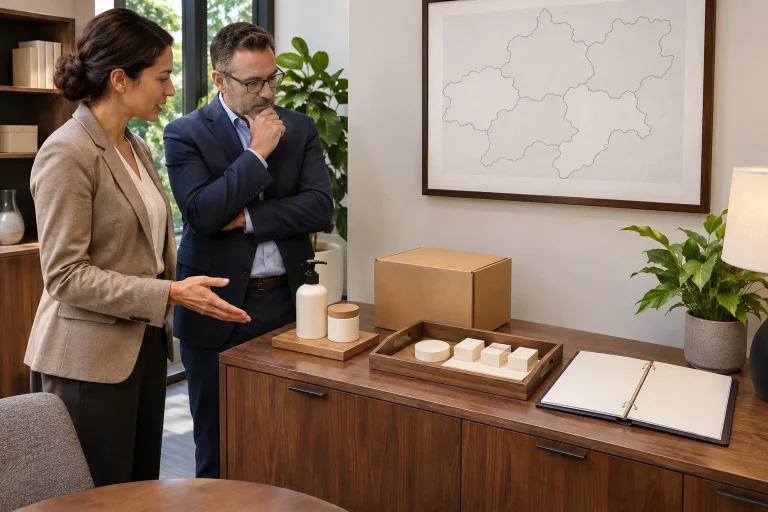
Prepare for an insurance conversation by describing the business accurately and collecting the facts a licensed professional needs to assess it. Explain what you do, where you do it, which property and people are involved, and what customers or landlords require. This guide helps organize the discussion; it does not recommend coverage, limits, deductibles, or a particular policy.
Describe activities rather than relying on a label
“Consulting,” “retail,” or “cleaning” may hide important differences. Describe actual tasks, products, customer types, locations, transport, storage, and any work performed at customer premises. Include planned activities that will begin shortly after launch, while distinguishing confirmed plans from possibilities.
Record who performs the work and how the business uses employees, contractors, vehicles, or hired equipment. Ask the professional what further details are needed. Do not guess an answer to make an application easier; identify uncertain facts and resolve them.
The National Association of Insurance Commissioners explains that small-business insurance considerations differ from personal insurance and that package policies have limitations. That is a reason to describe the operating reality instead of assuming an existing personal policy or a product name covers it.
Bring a compact business fact sheet
Prepare current information in an appropriate secure format. The professional may need additional records, but a fact sheet can make the first conversation more focused. Keep sensitive documents out of casual email threads or shared public folders.
- Business activities and any specialist work.
- Operating, storage, and home-based locations.
- Equipment, stock, and other property involved.
- Vehicles and travel associated with work.
- People performing activities and the nature of their roles.
- Customer property or information the business handles.
- Relevant proposed contracts, leases, or venue requirements.
- Opening date and expected changes during the first year.
If asked for turnover, payroll, asset values, or other estimates, explain the basis and that the business is new. Ask how the estimate should be updated later. Avoid presenting an optimistic sales goal as an established fact.
Ask how the proposal matches the work
Ask the licensed professional to explain the proposed protection, important exclusions, conditions, and situations that need a different arrangement. Request clarification in plain language when a term is unclear. A broad heading such as liability or interruption does not tell you how a particular event would be handled.
Use ordinary hypothetical scenarios from your business to make the conversation concrete. Ask how the proposed wording would apply, what facts would matter, and where uncertainty remains. Keep the response linked to the actual proposal rather than recording an informal reassurance as a coverage guarantee.
California’s Department of Insurance publishes a small-business commercial-insurance guide and an agent-license checking route. Use your own jurisdiction’s insurance regulator to verify the relevant professional and find local guidance. California-specific procedures should not be assumed to apply elsewhere.
A hypothetical mobile service discussion
Imagine an illustrative founder offering a mobile equipment-cleaning service. Assume equipment travels in a vehicle, some work occurs at customer premises, and supplies are stored at home. The founder’s fact sheet separates travel, storage, customer-site activity, and any property temporarily in the business’s care.
The founder asks the professional which proposed arrangements address those activities and which do not. A customer contract requests evidence of insurance, so the founder also asks a lawyer and insurance professional to review the actual requirement before agreeing to it.
No policy choice is implied by this example. Its purpose is to prevent a vague “mobile service” description from omitting material facts. The correct arrangement depends on the business, jurisdiction, insurer, and policy wording.
Compare proposals without losing the differences
Use a table with provider, stated activities, proposed terms, important exclusions, conditions, total cost, and unresolved questions. Compare equivalent information where possible. A lower premium may correspond to materially different terms, and a certificate alone should not substitute for understanding the policy.
Ask what confirms that an arrangement is in force, when it takes effect, how payment or conditions affect it, and how to report a change or claim. Obtain the relevant documents through the authorized process and store them where responsible people can find them.
Schedule a review when activities, premises, staffing, products, vehicles, or contracts change. A good first conversation creates an accurate description and a list of answered and unresolved questions. It should leave the licensed professional making the coverage assessment with the facts they need.