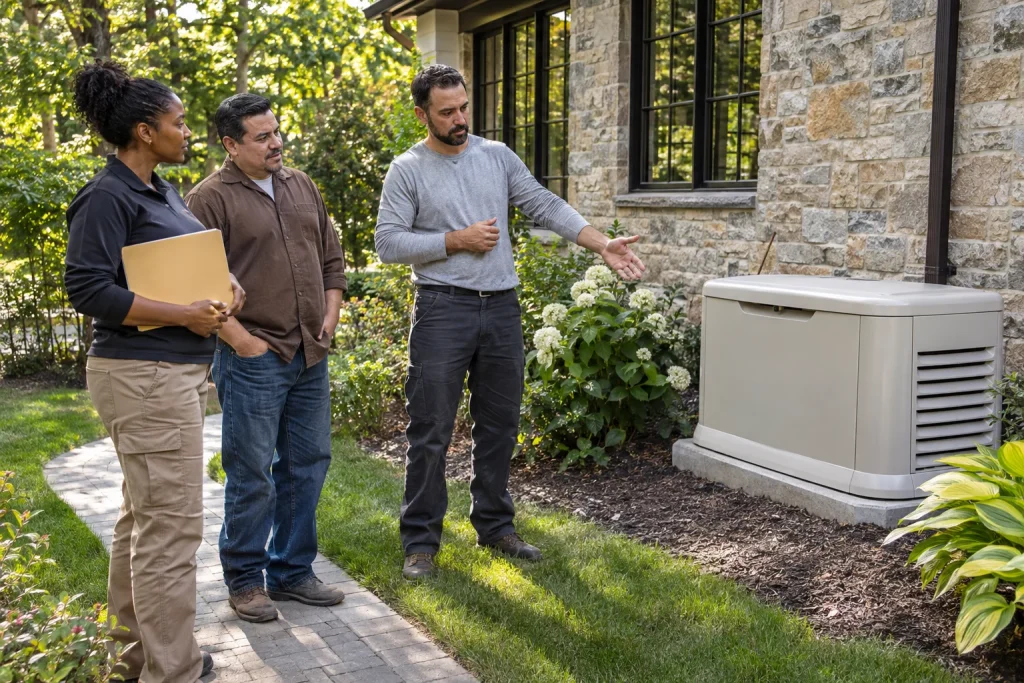
Evaluate generator services as an electrical business line by mapping who is responsible for each stage: sale, site assessment, equipment supply, the electrical connection, any fuel-side work, permits and inspection, commissioning, maintenance and warranty claims. Then check whether you have the people and hours to cover your share, year-round, including the weeks when everybody calls at once. This article covers business structure. It does not cover fuel handling, wiring or equipment setup.
Start with your role in the chain
Standby generator work often involves several licensed parties, and manufacturers set up different programs for different roles. Using one brand purely as an example, Generac’s installer programs page (as checked November 12, 2026) describes a residential dealer program in which a business buys direct from the factory and chooses sales only, service only, or combined sales and service, and a separate contractor program in which a business buys through an existing electrical wholesaler. The page says wholesale payment terms depend on the wholesaler’s approval and does not list eligibility criteria, so you must ask the manufacturer directly. Other brands structure their networks differently. The point for you is that “we sell generators” and “we service generators” can be separate commitments with separate obligations.
Responsibility matrix
Fill this out for each brand and each job type before you advertise. Write the name of the responsible party in each row, whether that is your company, a partner dealer, a licensed fuel contractor or the customer.
| Stage | Questions to answer in writing |
|---|---|
| Sales and sizing | Who sells the equipment, who is responsible for the selection and who documents the customer’s loads and expectations? |
| Site assessment handoff | Who visits, what information is captured, and how does it reach the person who prices and installs? |
| Electrical connection | Which licensed party performs it, under whose permit and insurance? |
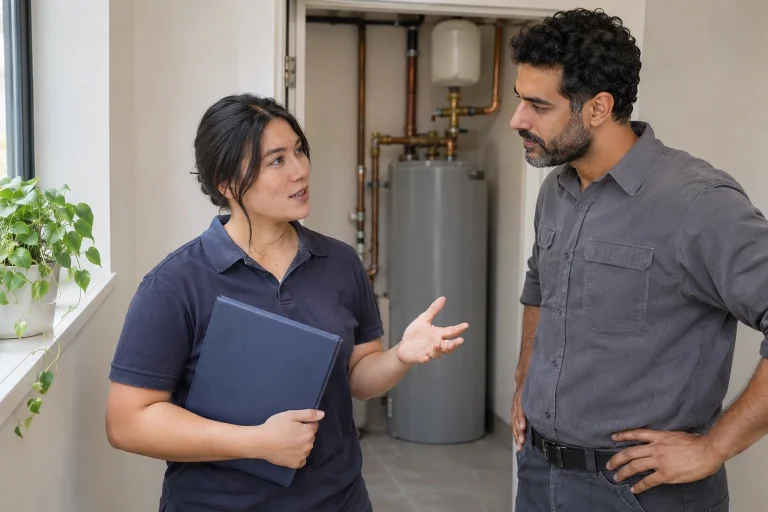
| Fuel-side work | Which qualified, licensed party performs any work that your license does not cover, and who coordinates timing between the parties? |
| Permits and inspections | Who applies, schedules and attends, following the workflow in your permit register? |
| Commissioning and handover | Who starts the equipment under the manufacturer’s process, and who records it and registers it? |
| Maintenance | Who is the certified or authorized service party, and how often are visits scheduled? |
| Warranty claims | Where does the customer call, and who authorizes repairs? |
The OSHA rule at 29 CFR 1926.403 says listed or labeled electrical equipment must be installed and used according to the instructions that come with it. Make sure the installer has the manufacturer’s current instructions, and make your quote depend on them.
Warranty routing: decide before the sale
Generac’s service request page shows one pattern: the owner enters a serial number, chooses a service type such as scheduled maintenance, repair or warranty repair, and consents to have the request shared with a Generac certified service dealer, which a local provider then handles. For urgent issues, the page tells owners to contact a nearby dealer directly. The page does not explain how warranty claims are processed, so confirm that with the manufacturer. If you sell but do not service, tell the customer in writing who will answer their call. If you service but did not install, find out how the manufacturer treats the installer’s work for coverage purposes.
Maintenance capacity: the part owners underestimate
A maintenance base turns a project line into recurring work, but it also commits your technicians’ hours. Use a capacity calculation, with your numbers instead of these.
Hypothetical inputs: one technician has 1,560 productive hours per year. You allocate 25% of those hours to generator maintenance. Each visit takes 2.0 hours including travel and paperwork.
- Allocated hours: 1,560 × 0.25 = 390
- Maximum annual visits: 390 ÷ 2.0 = 195
- At 80% planned utilization to leave room for repeat visits and emergencies: 195 × 0.8 = 156 annual maintenance visits
If each agreement includes one visit a year, 156 agreements is the ceiling for this technician. If each includes two, the ceiling is 78. Sign no more than you can serve, and put the visit frequency in the agreement.
The storm-season test
Generator demand clusters around outages and weather. Ask what your policy will be when 30 customers call in two days. Decide in advance who gets priority (agreement holders, then others), how you will communicate delays, and what you will not promise. Do not advertise response times you cannot staff.
Economics checklist
- Training, certification or program costs, and how many jobs it takes to recover them
- Equipment supply terms, return policies and lead times
- Insurance implications of added scope, checked with your insurer
- Permit and inspection time per install, from your register
- Maintenance hours per agreement and the price that covers them at your full cost per hour
- Callback and warranty hours that nobody pays for
Licenses vary by state and sometimes by scope. The SBA licensing guidance says requirements depend on activities and location and that local governments set their own rules, so verify what your license covers before you list a service.
Decision rule
Add the line if you can complete the matrix with named parties, you can staff maintenance at 80% utilization or less, and the first-year economics work without assuming a manufacturer incentive. Otherwise, start as a referral partner: refer the sale and fuel-side work to another qualified business and take only the portion you can fully support.
Sources
Primary pages read for this article, as checked November 12, 2026. Rules and figures change, so confirm current requirements with the relevant agency or professional.
- Generac: Installer Programs: One manufacturer’s dealer and contractor program tracks.
- Generac: Request Service for Standby Generators: One manufacturer’s service request and warranty-repair routing.
- OSHA 29 CFR 1926.403, General Requirements (Electrical): Listed or labeled equipment is installed and used per its instructions.
- SBA: Apply for Licenses and Permits: Licensing requirements vary by activity and location.