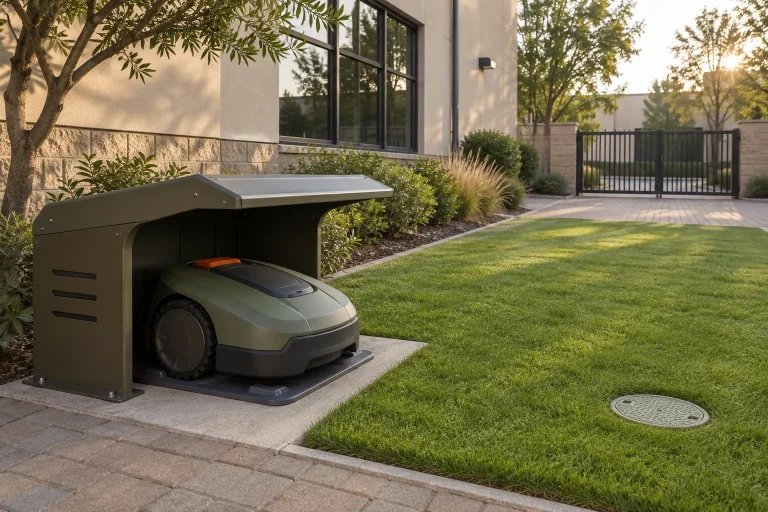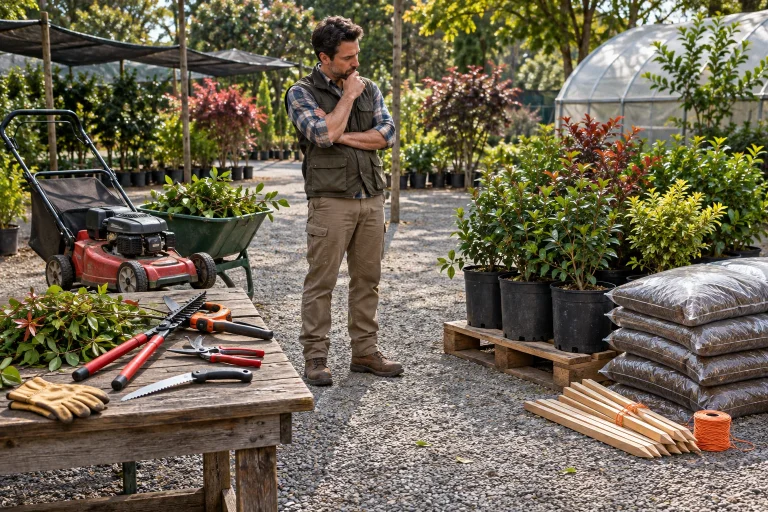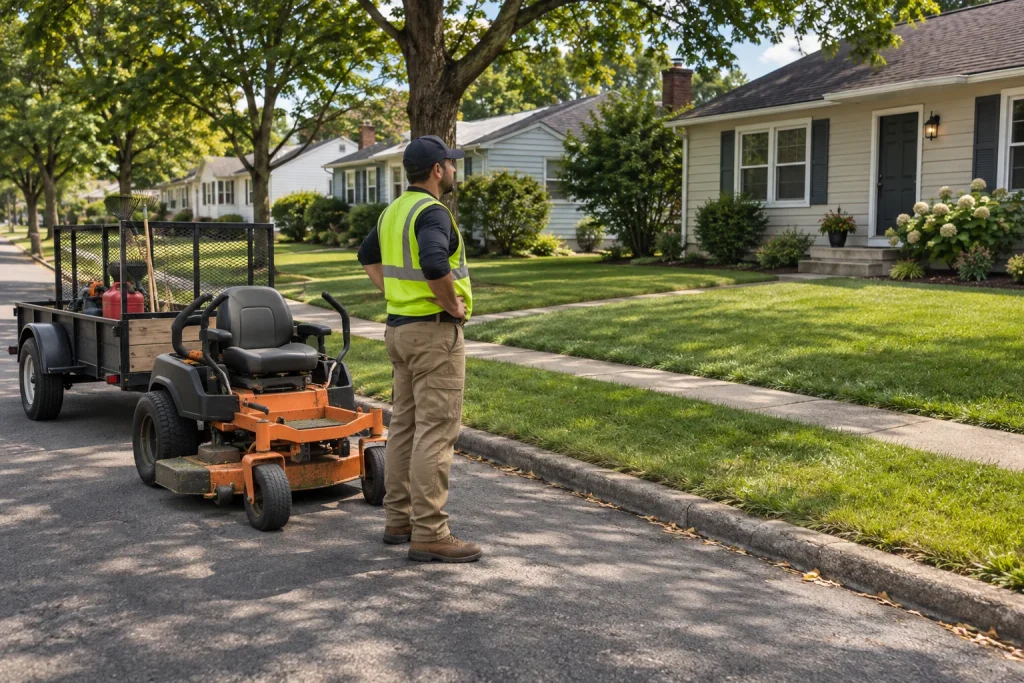
A lawn mowing business needs enough suitable properties close together to support the time spent traveling, unloading and servicing each stop. Test the route and equipment fit before expanding the service area. A full day of appointments can still leave weak economics when the properties are scattered or difficult to access.
Define the mowing offer and property fit
Specify the maintained areas, expected condition, visit frequency and what happens to clippings. State whether edging, trimming or basic cleanup is included. Keep irrigation repair, pesticide application, tree work and landscape construction separate from the initial mowing offer unless the business is properly prepared for them.
Inspect gate width, slopes, obstacles, parking and the route from the vehicle to the lawn. A larger mower can be unhelpful if it cannot reach the work. Record site conditions that require a different method or make a property unsuitable for the planned service.
- Areas included and areas excluded from the visit.
- Expected grass condition and treatment of overgrown first visits.
- Frequency and seasonal schedule assumptions.
- Customer preparation, pets, gates and removable obstacles.
- Weather postponement and rescheduling process.
- How property changes affect the quote.
Count total stop time
Measure drive time, parking, unloading, work, cleanup and reloading separately. Include fuel or charging arrangements, maintenance and equipment transport. These tasks are real operating time even when customers only see the mowing itself.
For a hypothetical route, assume each of five stops needs forty minutes of service and twenty minutes of combined travel and handling. The route uses five hours before breaks, maintenance and administration. If travel rises by fifteen minutes per stop, the same work takes an additional seventy-five minutes. These invented times demonstrate why location matters; they do not establish expected productivity.
Build costs from labor, vehicle use, equipment purchase or rental, maintenance, consumables, insurance quotes and local disposal arrangements where relevant. Include the owner’s own labor and time spent estimating jobs. Avoid treating equipment repayment as the only cost that a route must support.
Plan training and seasonal limits
OSHA’s landscaping resources identify a broad range of hazards and point to training and safety-program material. Use equipment-specific instruction and a competent assessment of the work before accepting sites. This planning guide does not supply operating procedures for powered machinery, difficult terrain or work near hazards.
The Bureau of Labor Statistics describes grounds-maintenance work as physically demanding and often seasonal. Investigate the local growing season and customer needs rather than dividing a desired annual income by twelve identical months. Weather disruption and seasonal changes need room in the schedule.
Check official local requirements, noise restrictions and any rules affecting the planned services. Pesticide work can involve separate requirements; do not add it casually to a mowing package. Ask an insurance professional to assess the equipment, transport and property work the business intends to perform.
Run a compact route pilot
Start with a small group of suitable properties in one area after the necessary setup and training. Record actual stop time, access problems, condition differences and customer-requested extras. Compare what was quoted with what workers actually had to do.
An illustrative pilot might show that three nearby properties fit the same equipment well while a fourth needs extensive handling through a narrow side access. The owner can price that additional time, use another suitable approach or decline the property. The important decision is to recognize the difference rather than averaging it away.
Set a weather policy that customers can understand and the team can implement. State how postponements are communicated and how the business protects the quality of the work. Avoid promising fixed arrival times that depend on every previous stop finishing perfectly.
Expand route density before expanding geography when the evidence supports that choice. Review the full route’s time and cost after adding a stop. A useful growth decision leaves capacity for maintenance, delayed visits and customer communication instead of consuming every available minute with nominal mowing time.
Keep a record of time lost to gates, parked vehicles or items left on the lawn. If those delays recur, review the preparation agreement with the customer. Do not solve a route problem by rushing the machinery work. The data should reveal whether the stop needs a different arrangement, price or acceptance decision.
Compare equipment downtime with the promises already made. A maintenance plan needs suitable backup arrangements or a clear rescheduling process when a machine is unavailable. Include that planning cost before adding more recurring customers, especially when weather already compresses the available work into fewer suitable days.