AI & Automation
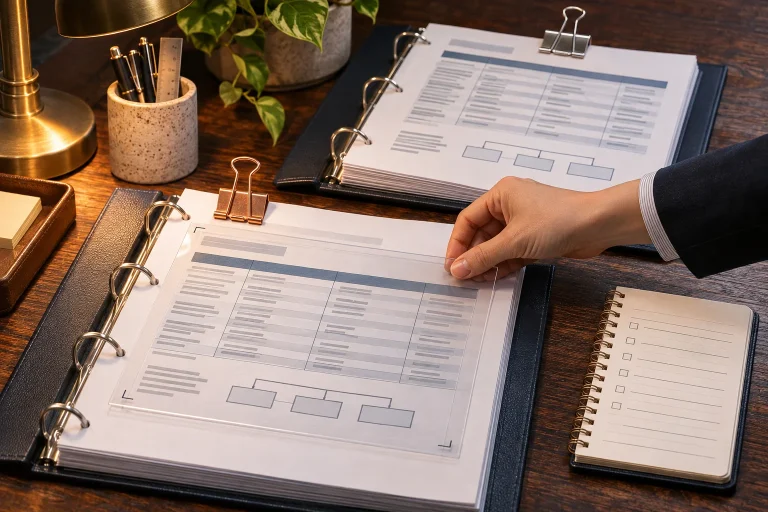
Build a Proposal Requirements Matrix Before Asking AI to Draft
Convert an incoming request into a traceable list of requirements, evidence, owners and unresolved questions before asking AI to write the proposal.
Put useful technology to work, with a plan for the human handoff.
Convert an incoming request into a traceable list of requirements, evidence, owners and unresolved questions before asking AI to write the proposal.
Use a translation review card to preserve product identity, material claims, units and customer meaning before releasing localized product text.
Use AI to prepare invoice fields for checking while duplicate detection, vendor verification, approval and payment stay separate.
Use AI to locate possible differences, then verify them against preserved document versions and a comparison table before making a business decision.
Map identifiers, source times and unresolved facts before an agent carries information from an email into customer and job records.
Observe an AI workflow alongside the current process while its suggestions stay out of customer communications and live records.
Read the task, scoring rules and operating environment behind an AI benchmark before deciding what its headline number means for your workflow.
Evaluate a second model as an additional check on customer drafts, using source-backed findings, a worked cost example and human resolution of disagreements.
Compare browser control and API connectors by the task they can actually complete, the access they require, and what happens when a step fails.
An agent can carry temporary context, but customer, job, and policy facts need an authoritative business record with an owner and a correction path.
Multiple agents create more handoffs, state, and failure modes. Use one bounded agent unless separate roles and an explicit coordinator solve a problem that one controlled workflow cannot.
An AI workflow should not quietly inherit an employee’s broad access. Give it a distinct identity, narrow scopes, a named owner, and a removal path.