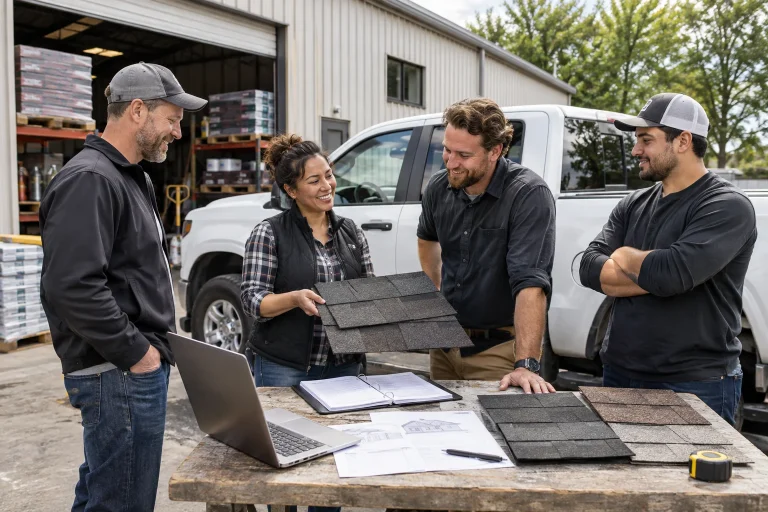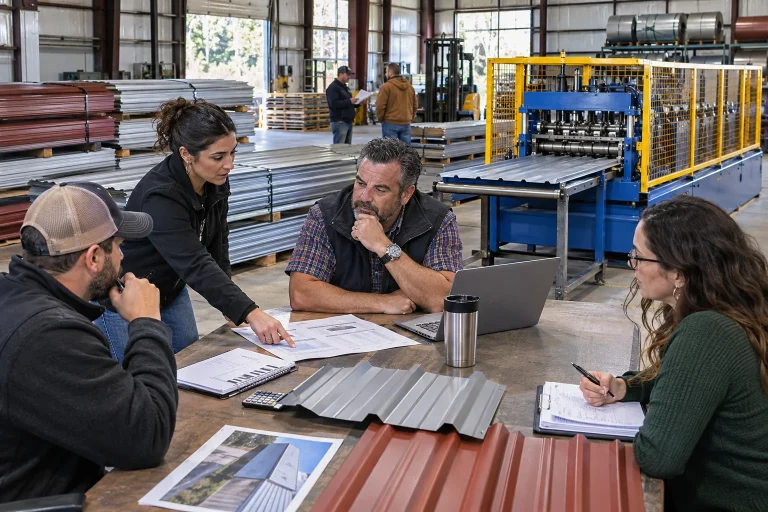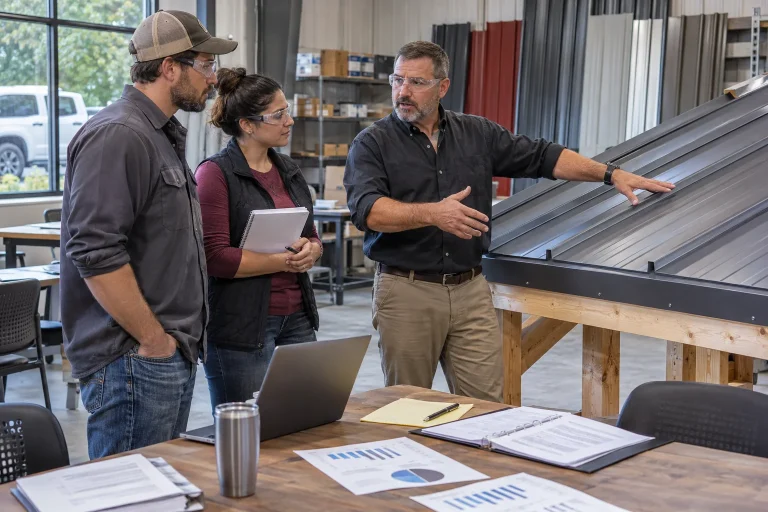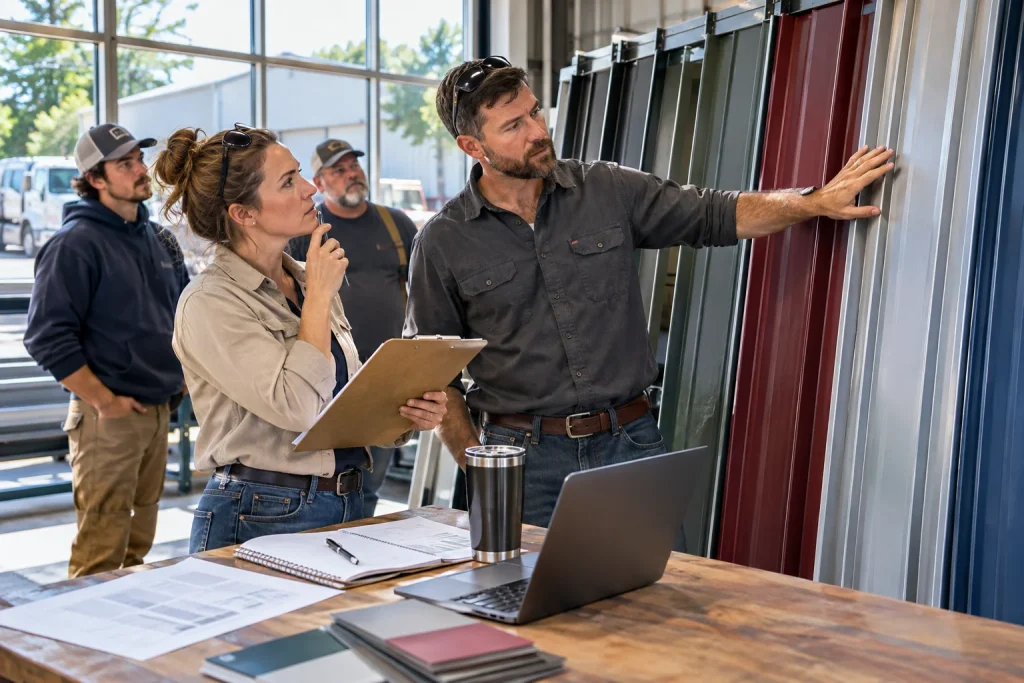
Start a metal roofing company by choosing one metal system, one qualified lead, one supply route and one warranty path, and compare that focus against a general roofing launch before you commit. Metal is not a single product. Panel profiles, attachment methods, finishes and manufacturer requirements differ, so “we do metal” is not an offer a customer or a supplier can evaluate. This article is about the business decision, not installation technique; follow each manufacturer’s current instructions for the work itself.
Pick the system before the company name
Write one sentence that names the system class you will sell first, the building types it fits and the manufacturer or distributor you will buy from. If you cannot name the manufacturer, you cannot know what training, documentation or approved details it expects. One supplier’s weathertight warranty page shows what that can mean in practice: the program involves certified contractors, specified installation details, application materials such as roof plans and specifications, and project inspection. Programs differ by supplier, so read the real documents for the system you pick.
Three tests before the first sale
- Qualified lead. Who has installed this system class, supervised others doing it and can sign off on quality? If no one has, plan paid training and supervised practice first. The Metal Construction Association’s installation manual is described by the association as a complete course for trainees, roofers moving from other materials, installers and sales staff, with an optional exam leading to a certificate of completion. It is a study resource, not a replacement for the manufacturer’s instructions on your project.
- Supply model. Decide whether you will buy finished panels and trim from a supplier, order custom lengths, or eventually produce panels yourself. Start with supplier-made panels unless you already have a committed volume that justifies equipment.
- Warranty route. Know which documents a customer will receive and who issues each one before you describe warranty coverage in a sales conversation.
Experience takes time. The Bureau of Labor Statistics notes that some roofing materials are used infrequently, so gaining experience across all roof types may take several years. That is a reason to narrow your first offer rather than promise every roof type.
Safety does not get easier on metal
OSHA’s roofing guide says employers should plan ahead so proper equipment, material and trained workers are available, and it notes that high winds, wet weather and icy conditions are especially hazardous on roofing surfaces that can be slippery when wet, listing metal roofs among them. A specialty crew needs a written weather and surface-condition rule before the first schedule is built. That guide is advisory and was published in 2015, so confirm current OSHA requirements.
Specialty or general launch: a scoring sheet
Score each factor from 1 (weak) to 5 (strong) for your own situation. The weights are illustrative; change them to match your constraints.
| Factor | Weight | Metal specialty | General roofing launch |
|---|---|---|---|
| Crew experience with the named system | 30 | Score 1 to 5 | Score 1 to 5 |
| Supplier access and credit for the system | 20 | Score 1 to 5 | Score 1 to 5 |
| Local buyers you can reach this quarter | 20 | Score 1 to 5 | Score 1 to 5 |
| Warranty path you can explain accurately | 15 | Score 1 to 5 | Score 1 to 5 |
| Cash needed before first collection | 15 | Score 1 to 5 (5 = low need) | Score 1 to 5 |
Worked example (hypothetical). Suppose the metal specialty scores 4, 3, 2, 3 and 2 on the five rows. Multiply each score by its weight and add: 4 x 30 = 120, 3 x 20 = 60, 2 x 20 = 40, 3 x 15 = 45, 2 x 15 = 30, for a total of 295. The general launch scores 3, 4, 4, 3 and 4: 90 + 80 + 80 + 45 + 60 = 355. Out of a maximum of 500, the general launch leads by 60 points because buyers and supplier credit are easier to reach. The sheet does not say metal is a bad idea. It says that, as scored, the specialty needs a stronger answer on local buyers and cash before it should lead.
Questions to put to a supplier or manufacturer
A supplier relationship is part of the offer, so interview the candidates the way a customer would interview you:
- What documents does a contractor receive for this system, and which ones does the customer receive?
- What are lead times for stocked items and for made-to-order lengths, and what happens when a delivery is late?
- Are there minimum orders, restocking charges or return limits on special orders?
- Who answers technical questions before a job and during it, and how quickly?
- What does it take to qualify for the programs you plan to mention in a sales conversation?
Record the answers with dates. They become the foundation of the job packet and, later, your customer closeout file.
What would change the answer
- A supplier that agrees to a credit line and a training path for the system you want.
- Two or three signed or verbally committed local metal jobs, confirmed in writing, rather than general interest.
- A lead who has already supervised the system and can document that experience.
If the answers stay weak, a general roofing launch that adds one metal system later may fit better. Confirm licensing for any roofing work with your state and local agencies, and let your attorney review contract and warranty language.
Sources
Pages below were read on November 12, 2026. Rules, programs and warranty terms change, so confirm current details with the named agency or document before relying on them.
- Metal Construction Association: Metal Roof Installation Manual. Supports the description of the manual as a metal roofing course for trainees, installers and sales staff, with an optional exam leading to a certificate of completion.
- Sheffield Metals: Weathertight Warranties. Supports the example that one supplier’s weathertight warranty program involves certified contractors, installation details, application materials and project inspection.
- OSHA: Protecting Roofing Workers (Publication 3755, 2015). Supports the statements that roofing hazards include wet, slippery surfaces including metal roofs, and that employers should plan for equipment, material and trained workers.
- U.S. Bureau of Labor Statistics: Roofers, Occupational Outlook Handbook. Supports the statement that some roofing materials are used infrequently, so gaining experience across all roof types may take several years.