A roofing closeout process hands the customer one organized packet with the approved scope, evidence the work was completed, invoices and receipts, and the actual manufacturer and contractor warranty documents, and it gives you a clean record before the job is considered finished. Closeout is where a good job turns into a referral or a dispute. It is also where cash stalls: unfinished paperwork delays final payment and warranty registration. This guide covers the business process; the content of any warranty or legal document comes from the issuer and your attorney.
The closeout packet
| Item | Purpose | Notes |
|---|---|---|
| Signed contract and approved change orders | Shows what was agreed and what changed | Include dates and approvals |
| Scope completion summary | Compares delivered work with the scope in plain language | List anything deferred or excluded |
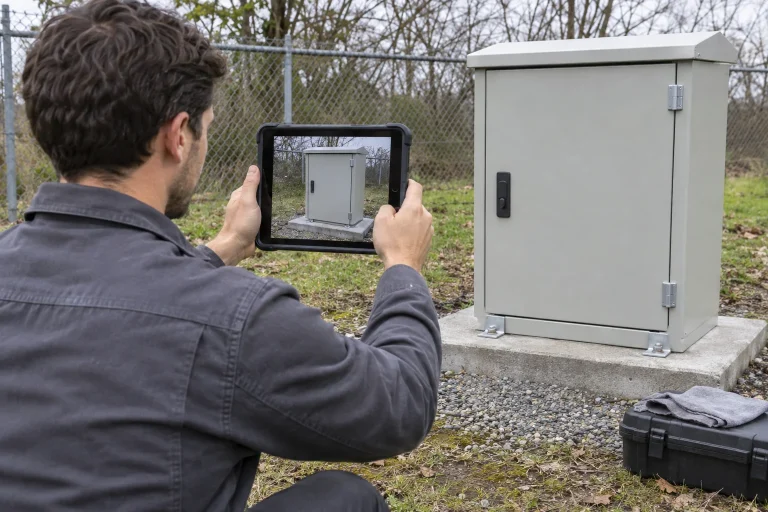
| Completion record | Evidence of the finished condition, such as dated photos and the crew lead’s sign-off | Follow your own photo standard |
| Permit and inspection sign-off | Shows that required inspections were completed | Only where a permit applied |
| Final invoice and payment receipts | Closes the financial record | Matches the payment schedule in the contract |
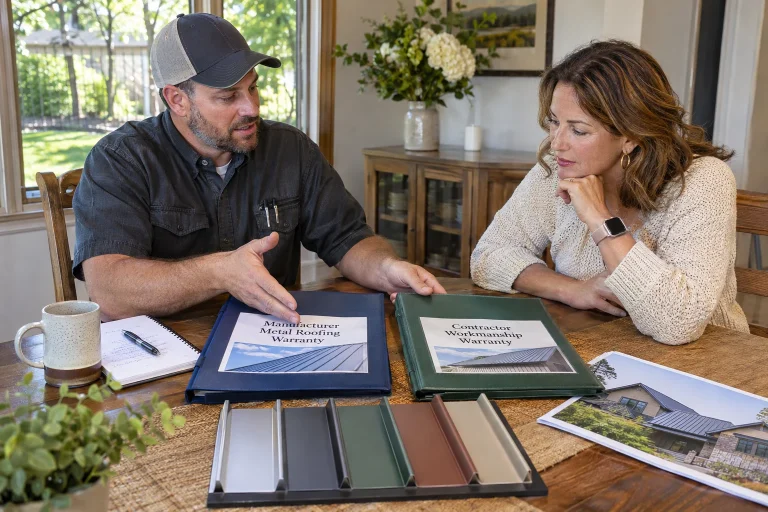
| Actual warranty documents | The manufacturer or supplier documents that apply to this roof, with registration status | Do not substitute a generic brochure |
| Maintenance and care requirements | What the documents say the owner must do and when | Quote the document; do not paraphrase from memory |
| Contact route | Who to call about questions, and what information to have ready | Name, phone, hours |
The warranty documents are the point
Do not describe coverage the documents do not state. The FTC’s guide to federal warranty law says a business is not required to offer a written warranty, but that when it does offer one on a consumer product, the terms must be set out in a single, clear and easy-to-read document. Whatever applies to your jobs, the practical rule is the same: give the customer the real document, clearly identified, and keep a copy. If your own workmanship terms exist, they should be in your signed contract as drafted by your attorney, not improvised in a closeout email.
Some manufacturer processes involve steps after installation. One supplier’s published description of its paint warranty says the signed warranty must be returned to the issuer. It also gives a coastal-installation example that requires maintenance records; do not assume that example applies to every product or location. Terms vary, so read the specific warranty for each product, assign the registration step to a named person and record the date it was done.
Keep only the records you need
A closeout file contains customer names, addresses, photos and payment details. The FTC’s guide to protecting personal information gives five principles: know what you hold, keep only what you need, protect it, dispose of what you no longer need, and plan for incidents. It recommends a written retention policy that says what to keep, how to protect it, how long and how to dispose of it. Decide your retention period with your accountant and attorney, then apply it consistently.
Measure days to closeout
Define closeout as complete when the customer has the packet, the final invoice is issued, the warranty registration steps are done and the file is archived. Days to closeout runs from the completion date to that point. In a hypothetical example, five recent jobs closed in 4, 6, 9, 21 and 7 days. Total = 4 + 6 + 9 + 21 + 7 = 47, so the mean is 9.4 days. Sorted, the values are 4, 6, 7, 9, 21, so the median is 7 days. The mean is pulled up by one slow job; the median tells you what is typical.
The 21-day job deserves a review. Suppose it waited on a supplier document. That points to a fix: ask for the document at the time of the order, not at completion. Set a rule that any job open past day 10 gets escalated to the owner, with a named reason.
A closeout routine
- Day of completion: crew lead completes the completion record and walks the customer through the work, noting any open items.
- Day 1: office checks the packet against the table and sends the final invoice per the contract.
- By day 5: warranty documents delivered and registration done where required.
- Day 10: any open job is escalated.
- After payment: archive the file and schedule a short feedback request.
Failure cases
- Delivering a packet with a warranty document for a different product or color.
- Letting final payment wait on paperwork that could have been prepared before the job ended.
- Keeping every photo and document indefinitely with no policy or protection.
- Telling the customer what the warranty “basically” covers instead of handing over the document and pointing to the relevant section.
Closeout is also the moment to set expectations for future callbacks. Tell the customer how to report a problem and what happens next, using the contact route in the packet.
Sources
Pages below were read on November 12, 2026. Rules, programs and warranty terms change, so confirm current details with the named agency or document before relying on them.
- Federal Trade Commission: Businessperson’s Guide to Federal Warranty Law. Supports the statements that the federal warranty law does not require a business to offer a written warranty, and that when a written warranty on a consumer product is offered, its terms must be presented in a single, clear and easy-to-read document.
- Sheffield Metals: Metal Roof Paint Warranties in Simple Terms. Used as one example of a finish warranty process: the signed warranty is returned to the issuer; its coastal-installation example also requires maintenance records.
- Federal Trade Commission: Protecting Personal Information, A Guide for Business. Supports the principles of keeping only the personal information you need, protecting it, and disposing of it properly, with a written retention policy.